5 Min
5 Min
In OTC training

Bookmark
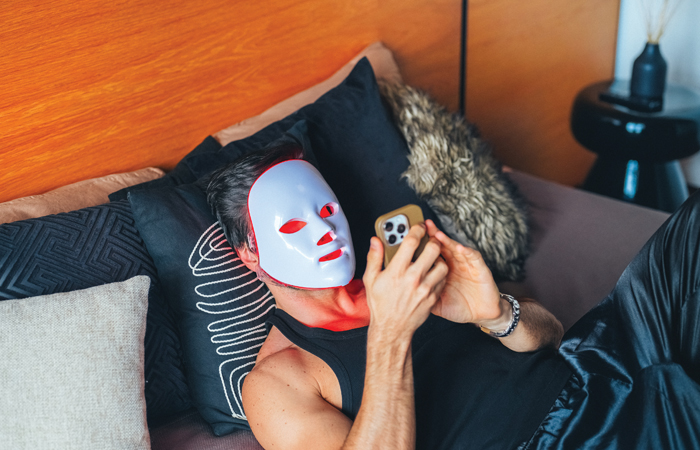
Scroll through any skincare corner of social media right now and you’ll struggle to avoid a glowing face mask staring back at you.
LED and red light therapy devices – from full-face masks to hand-held wands and wireless goggle-style gadgets – have become one of the most talked-about “biohacking” trends in beauty.
Influencers are promising everything from smoother skin and faded fine lines to reduced acne, calmer redness and a boosted glow – sometimes within a matter of weeks.
The claims are bold and the price tags often are too, with some devices retailing for hundreds of pounds.
Product videos are typically dressed up in the language of clinical credibility, talking about near-infrared wavelengths, collagen stimulation, cellular repair, dermatologist recommendations, and specific percentages promising visible results in a set number of weeks.
For pharmacy customers who have seen these devices all over their feeds, it’s natural to wonder whether they actually work, whether they’re safe to use at home, and whether they’re worth the investment.
So, what does the evidence really say, and what do pharmacy teams need to know?
Misunderstandings
The hype surrounding these products centres on being able to achieve medical-grade results from at-home LED and microcurrent gadgets.
However, experts say the clinical reality is that while mild light therapy can support superficial circulation, the power outputs of at-home devices are much less than medical-grade technologies, and the results are too.
Dr Natalia Bratu, GP, dermatology expert, aesthetic medical doctor and founder of Refine Clinic, says the biggest myth or misunderstanding is that a home device is simply a smaller version of a clinic one. “It’s not, I assure you,” she says.
“The output is a fraction, so the honest comparison is a gentle daily walk against a structured training programme.”
The second myth, according to Dr Bratu, is the medical claims often attributed to at-home devices. “In November 2025, the Advertising Standards Authority banned adverts from several LED mask sellers for suggesting the devices could treat acne or rosacea,” she says.
“Medical claims require registration with the MHRA and, at that point, the MHRA confirmed no LED face masks were registered on its database at all. So when someone says a mask treats their acne, that’s not an authorised claim.”
The third myth is that devices with more light colours mean more benefits. “The evidence sits mainly with red and near-infrared”, says Dr Bratu. “So things like seven-colour masks are largely a marketing angle.”
Another common myth to tackle is that microcurrent devices can ‘lift’ the face. “Yes, these stimulate muscle, but it doesn’t replace lost volume or tighten loose skin,” says Dr Bratu.